Disclosure: This post contains affiliate links. If you purchase through these links, I may earn a small commission at no extra cost to you. I only recommend products I personally find useful.
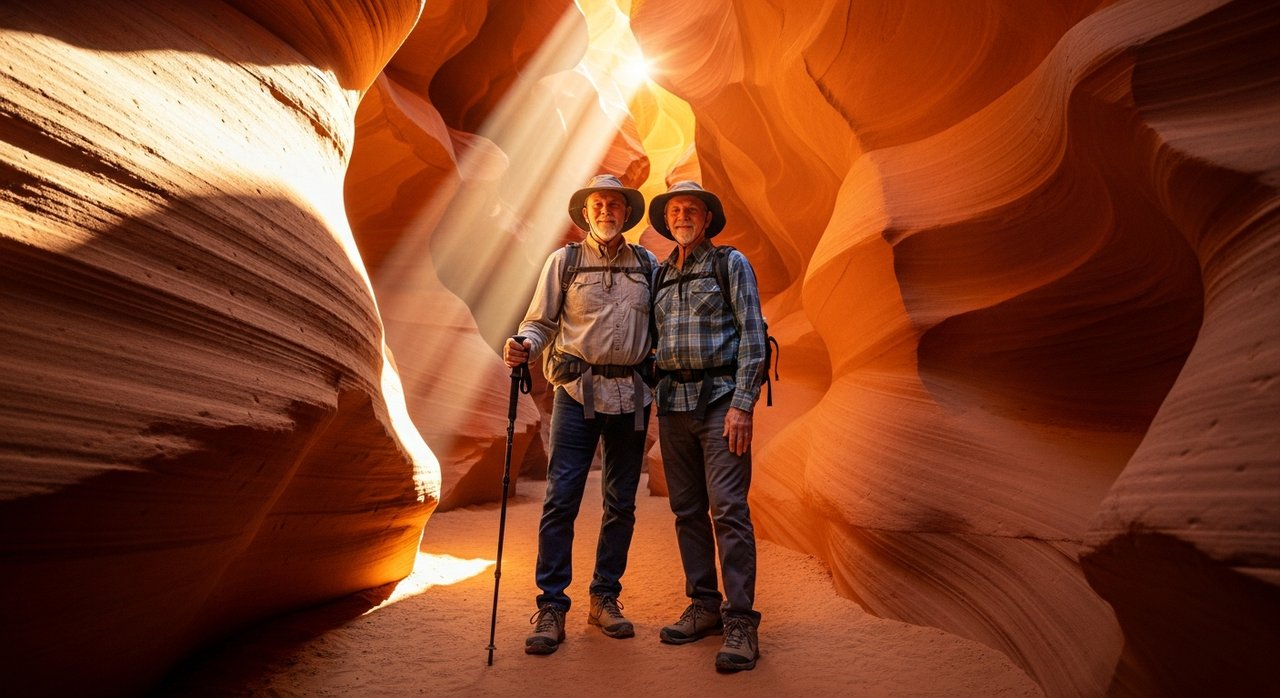
It was a cool October morning — one of those rare Las Vegas days when the desert air actually feels kind. I was sitting in my Tesla at a red light near the Strip, and the couple in the back seat was talking about Antelope Canyon. “We went last summer,” the woman said. “It was incredible, but the heat nearly killed us.” Her husband nodded. “I told her next time we go in spring.” That small conversation stuck with me. I’ve been living in Las Vegas for over a decade, and I’d never made the drive out to Page, Arizona. These things happen — you live near something world-famous and somehow keep putting it off. So I started doing my homework on what an antelope canyon accessible tour for seniors actually looks like in 2026.
Here’s what I found — and what I wish someone had told me sooner.
Upper vs. Lower Antelope Canyon: Which One Is Actually Right for You?
This is the first question every senior needs to answer before booking anything. There are two separate slot canyons in Page, Arizona — Upper and Lower — and they are very different experiences, especially if mobility matters to you.
According to Las Vegas Convention and Visitors Authority, Las Vegas continues to be one of the most visited destinations in the world, with robust senior-friendly infrastructure and a wide range of accessible attractions and services.
Upper Antelope Canyon (also called “The Crack”) is the one you’ve seen in photographs — those famous beams of light pouring through narrow sandstone walls. The good news for seniors is that the path inside is almost entirely flat. You enter at ground level, walk roughly 100 yards on packed sand, and exit without ever climbing a single stair. The off-road truck ride to get there is about two miles on a sandy surface, and some folks over 70 do it without a second thought. Tour guides are typically Navajo guides who know the terrain well and will slow down if you ask.
Lower Antelope Canyon is a different story. The canyon sits below ground. Getting in and out requires descending and ascending metal ladders — some nearly 25 feet tall. There are also boulders to step over and tight passages to squeeze through. For someone with knee issues, hip replacements, or balance problems, Lower is genuinely risky. One TripAdvisor review I came across warned: “Be careful with older people — the climb out is harder than it looks.” That’s honest advice.
My recommendation: if you have any mobility limitations at all, go Upper. If you’re a fit 60-something who walks three miles a day and wants a more dramatic experience, Lower is doable — but go with that knowledge in your back pocket. The Upper Canyon tour typically runs about 60–90 minutes inside, which is very manageable if you’re pacing yourself on a long driving day.
📌 Related: Red Rock Canyon Scenic Drive for Seniors — Las Vegas Gu
When to Go — And When to Stay Home
Here’s something that tour websites bury in the fine print: in peak summer (May through September), temperatures in Page, Arizona regularly hit 40°C (104°F) or hotter. Some operators explicitly advise against bringing visitors over 60 during those months. The canyon itself is narrow and crowded, which means reduced airflow and shared oxygen with dozens of other tourists.
The sweet spot for seniors is March through April and October through November. The crowds thin, the temperatures drop to a very comfortable 60–75°F, and the light conditions inside the canyon are still stunning. I’d personally aim for a midmorning tour in October — the angle of sunlight creates the most dramatic beams, and you’re not competing with summer tour buses.
Spring and fall are also when the Navajo-guided tours from Las Vegas run most smoothly. The drive from Las Vegas to Page is roughly 280 miles — about a four-and-a-half to five hour haul each way. That’s a long day. If you’re 66 and driving solo like I sometimes do, consider staying overnight in Page. The cost of a modest motel there is far less than the exhaustion of a same-day return drive. Page has decent dining options and Horseshoe Bend is just a short walk from the trailhead — well worth a second morning visit if you’re already there.
How to Book — And Why You Need to Do It Now
Antelope Canyon is on Navajo Nation land, which means every visitor must book through a licensed Navajo tour operator. You cannot simply show up and walk in. This is a hard rule, and it’s non-negotiable.
Upper Antelope Canyon tours run about $105 per adult, plus a $15 Navajo permit fee — so roughly $120 total per person. There are no official senior discounts listed on most tour websites, but I’d call ahead and ask. Some operators will work with you, especially during off-peak months.
The bigger issue is availability. Tour slots — especially the popular midday times that produce the best light — sell out weeks or months in advance. The 2026 inventory is already open at several operators as of this writing. If you’re planning a spring trip, book now. Seriously. I’ve seen people show up in Page expecting to get a same-day ticket and leave disappointed.
📌 Related: Best Accessible Attractions in Las Vegas for Seniors
A few operators worth checking: Antelope Canyon Tours (antelopecanyon.com), Ken’s Tours for Lower Canyon (lowerantelope.com), and the official Navajo Nation page for a full list of licensed operators. If you’d rather not drive, Las Vegas-based tour companies like MaxTour offer full-day packages with round-trip transportation from Strip hotels — typically running 11–12 hours total.
What to Bring — and What to Leave in the Car
Wheelchairs, walkers, and mobility scooters are not permitted inside either canyon. That’s a hard rule due to the sandy terrain and tight passages. If you use a walker regularly, you’ll want to assess honestly whether Upper Canyon’s sandy floor is manageable for you — or bring a trusted companion who can help.
What is allowed and genuinely useful: trekking poles. A collapsible hiking pole gives you balance on the sandy, occasionally uneven ground without being bulky. I’ve been using a basic aluminum trekking pole on day trips lately, and it makes a real difference on desert terrain. If you don’t already have a pair, a collapsible trekking pole set designed for seniors is worth having before any desert excursion.
Beyond that: closed-toe shoes are mandatory — no sandals, no flip-flops. The sand inside the canyon is fine and deep in places. Bring a water bottle, apply sunscreen before you leave the car, and wear a hat that won’t blow off on the open truck bed. Leave your tripod in the hotel room; tour guides move at a steady pace and don’t stop for extended photo setups. Your phone camera is honestly good enough — the canyon does all the work. The light beams, if you’re there at the right time of day, are genuinely unlike anything else in the American Southwest.
🥾 If you decide to try trekking poles:
TrailBuddy Collapsible Trekking Poles — lightweight aluminum, folds small enough for luggage
Frequently Asked Questions
Is Antelope Canyon safe for seniors over 65?
Upper Antelope Canyon is generally safe for active seniors. The path is flat, the terrain manageable, and Navajo guides are experienced with all types of visitors. The main cautions are heat (avoid May–September), the off-road truck ride to the entrance, and the sandy floor which requires stable footing. If you have significant mobility limitations, speak with your doctor and the tour operator before booking.
How far is Antelope Canyon from Las Vegas?
About 280 miles — roughly a four-and-a-half to five hour drive each way. It’s a doable day trip, but a long one. Many seniors prefer to book a Las Vegas-based tour with transportation included, or stay overnight in Page, Arizona to make the most of the area.
Which canyon section is better for seniors — Upper or Lower?
Upper Antelope Canyon is significantly more accessible. It has a flat, ground-level path with minimal stairs. Lower Antelope Canyon requires climbing metal ladders up to 25 feet and stepping over boulders — not recommended for anyone with knee, hip, or balance concerns.
Do I need to book in advance?
Yes, absolutely. Tours — especially popular midday slots — sell out weeks and sometimes months ahead. The 2026 schedule is already open at most licensed operators. Book as early as possible, especially for spring travel (March–April).
Are wheelchairs allowed at Antelope Canyon?
Not inside the canyon itself. Wheelchairs, strollers, and walkers are not permitted due to the sandy terrain and narrow passages. Collapsible trekking poles are allowed and recommended for balance support.
References
- Antelope Canyon Tours — Upper Canyon Sightseeing Tour
- Antelope Canyon Info — Best Section for Mobility Issues
- Navajo Nation Parks — Licensed Tour Operators
- MaxTour — Antelope Canyon Day Tour from Las Vegas
- Wonders Within Reach — Accessible Antelope Canyon Guide
Disclaimer: Prices, hours, and reservation requirements change — verify details directly with each site before your visit.