Disclosure: This post contains affiliate links. If you purchase through these links, I may earn a small commission at no extra cost to you. I only recommend products I personally find useful.
Back when I was dealing cards at a locals casino on the west side, I watched a guy come in every single Tuesday afternoon. Retired postal worker, maybe 68. Always sat down at my blackjack table, played for about two hours, tipped decently, then left. One Tuesday I asked him why he came in so regularly. He said, “I need somewhere to be.” Not the money. Not the cards. He just needed somewhere to be.
I thought about that a lot after I retired from my engineering career. Because when the structure disappears — no commute, no meetings, no deadlines — you realize how much of your sense of self was tied up in showing up somewhere and doing something. Retirement can be liberating. It can also be surprisingly empty.
That’s a big reason I started driving for Uber. Not the only reason — the money matters too, and I’ll get to that. But if you think driving Uber after retirement is just about picking up some extra cash, you’re only seeing half the picture. For a lot of seniors in Las Vegas and across the country, it’s also about staying mentally sharp, staying connected, and having somewhere to be.
Here’s what three years behind the wheel has actually taught me.
—
The Real Financial Reason: Supplementing Social Security Without Blowing the Limit
Let me start with money, because that’s usually where the conversation begins.
Social Security was never designed to be a complete retirement income. It was designed to be one leg of a three-legged stool — along with a pension and personal savings. The problem is, for most Americans over 60, one or two of those legs are wobbly. No pension. Not enough savings. And Social Security alone doesn’t stretch far in a city where the cost of living has risen steadily for the past decade.
Uber fills that gap for a lot of us. Part-time, on my schedule, in my car.
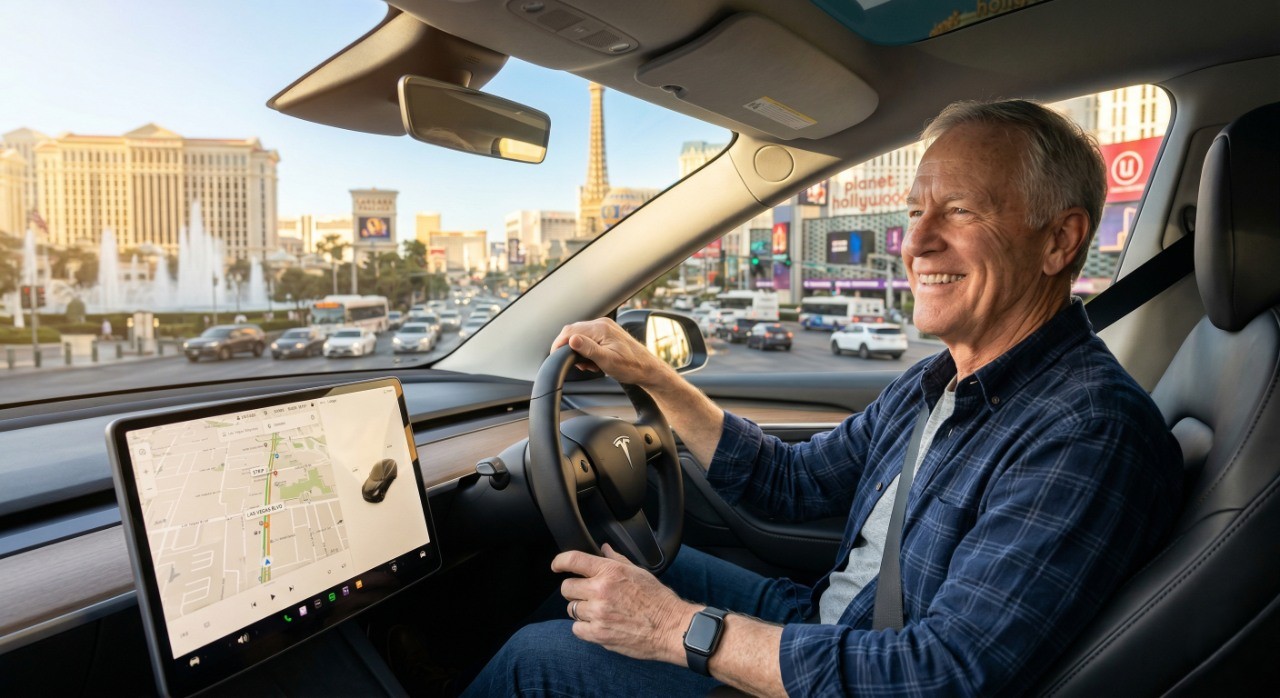
Here’s what the numbers look like for me on a typical week: I drive about 15 hours, usually Tuesday through Saturday, and I focus on airport runs and the Strip. Between those two, demand is consistent. I’m not chasing surges at 2 a.m. I’m picking up business travelers at Harry Reid International at 7 in the morning and dropping off convention attendees at the Venetian. Predictable, manageable, and — because I drive a Tesla Model Y — very low fuel cost.
Part-time like this, I’m bringing in roughly $800 to $1,100 a month. That’s not retirement-replacement income. But it’s enough to cover my car payment, utilities, and a few dinners out — without touching my savings.
There is one number every senior considering Uber needs to know: the Social Security earnings limit. In 2026, if you haven’t yet reached your Full Retirement Age (FRA), the limit is $24,480 per year — about $2,040 a month. Earn more than that, and Social Security withholds $1 for every $2 you earn above the limit. That’s not a penalty — it gets paid back later — but it affects your cash flow now.
The good news: once you hit FRA (66 or 67, depending on your birth year), the earnings limit disappears completely. Drive as many hours as you want. Earn as much as you want. Social Security doesn’t touch it.
I’m past FRA. So for me, every dollar I earn driving goes directly into my pocket. No cap, no withholding. That changes the math considerably.
📌 Related: Senior Mental Health in Las Vegas: Depression Over 60
—
The Mental Health Benefits Nobody Talks About (But Every Senior Needs to Hear)
Here’s something I didn’t expect: driving for Uber is actually good for my brain.
After I retired from engineering, the first six months were great. I caught up on sleep, traveled a little, watched a lot of basketball. By month seven, I was restless. By month nine, my wife told me I was driving her crazy. I needed something to do. Something with structure, purpose, and — this is the part most people miss — other people.
Research backs this up. According to AARP, working in retirement is linked to better mental health outcomes, including reduced risk of depression, slower cognitive decline, and lower rates of heart disease. The mechanism isn’t complicated: purposeful activity keeps the brain engaged. Social interaction keeps isolation from setting in. Routine gives your body and mind something to organize around.
Driving Uber gives me all three.
Every trip is different. I’ve talked to a NASA engineer heading to a conference at the Convention Center. A 22-year-old moving here from Tennessee with everything she owned in two suitcases. A retired teacher who drove all the way from Phoenix just to see Elton John’s residency. I’m 66 years old and I’m still learning things from passengers every single week.
That matters more than people realize. Isolation is genuinely dangerous for older adults. It increases dementia risk, it worsens depression, and it compounds health problems. Getting out of the house — even a few days a week, even just for a few hours — is not a luxury. It’s maintenance.
And there’s something else: the feeling of being useful. Of providing a service, doing it well, and being thanked for it. I can’t explain exactly why it matters at 66 as much as it did at 46. But it does.
—
Why Las Vegas Is One of the Best Cities for Senior Uber Drivers
Not every city is equally good for part-time rideshare driving. In some markets, demand is inconsistent, surge pricing is rare, and you spend half your time waiting. Las Vegas is different.
This city runs on tourism. Nearly 40 million visitors a year, and most of them need transportation. Harry Reid International Airport is one of the busiest in the country, and airport runs are the sweet spot for part-time drivers — predictable pickup location, clear destination, decent rate, polite passengers who are usually in a good mood because they just landed in Vegas.
📌 Related: Nevada Medicaid Eligibility Seniors 2026: Income Limits
The Strip hotels, the Convention Center, the Raiders stadium, the Golden Knights arena — there are always people moving around this city who need a ride. And because demand is spread across the week, not just weekends, a semi-retired driver who picks Tuesday through Saturday or Sunday through Thursday can build a consistent routine without fighting for surge time.
The electric vehicle advantage is also worth mentioning. I drive a Tesla Model Y — fitted with a dashboard phone mount and a dash cam, both of which I consider essential for any rideshare driver. My fuel cost is a fraction of what a gas-powered driver pays. In a city where summer temperatures hit 110°F and drivers run their AC constantly, that difference adds up. My cost per mile is low enough that I’m keeping significantly more of each fare than drivers in conventional vehicles.
And Nevada has no state income tax. The money I earn driving doesn’t get clipped at the state level. That’s one more reason the math works better here than in California or New York.
—
The Honest Downsides (Because There Are Some)
I’m not going to pretend driving Uber is perfect. A few things every senior should know before signing up:
Wear and tear on your vehicle is real. More miles means more maintenance. I budget for this. If you don’t, the expenses can surprise you.
There are no employee benefits. You’re an independent contractor. No health insurance, no sick days, no workers’ comp if you’re in an accident. Make sure your own insurance coverage is solid before you start.
The platform controls the rates. Uber sets the fares. Drivers don’t negotiate. If they cut rates — which they have done historically — your earnings drop. You have no leverage as an individual driver.
Night driving is where money is, but it’s not where I am. The late-night airport runs, the 2 a.m. bar crowd — those hours pay more, but I don’t drive them. I keep my hours daytime and early evening. My earnings are lower as a result. That’s a trade I’ve made deliberately.
If you go in with clear eyes about the downsides, they’re manageable. If you expect Uber to be a stable employer that looks out for your interests, you’ll be disappointed.
—
Questions and Answers
Can you drive for Uber and still collect Social Security?
Yes — but if you haven’t reached your Full Retirement Age yet, watch the earnings limit. In 2026, the limit is $24,480 per year (about $2,040/month) before FRA. Earn above that and Social Security temporarily withholds $1 for every $2 over the limit. Once you hit FRA, the cap disappears entirely and you can earn as much as you want with no effect on your Social Security check.
How much can a part-time senior Uber driver make in Las Vegas?
It varies significantly by hours, vehicle type, and which trips you take. Driving 10–20 hours per week focused on airport runs and the Strip, a realistic range is $600–$1,200 per month. Electric vehicles lower your cost per mile and improve your net. This is supplemental income, not replacement income.
Is there an age limit for Uber drivers?
Uber doesn’t publish an upper age limit for drivers. Requirements are a valid driver’s license, clean driving record, and passing a background check. Many drivers continue well into their 70s. The practical limit is whether you’re comfortable driving and whether your state license remains valid — some states require more frequent renewals after 70.
Is driving Uber good for mental health in retirement?
For many seniors, yes. Research links purposeful activity and regular social interaction to better cognitive health, lower rates of depression, and reduced isolation. Driving Uber provides all three — a daily routine, constant conversation with new people, and the satisfaction of doing a job well. It’s not therapy, but it’s not nothing either.
What kind of car is best for Uber driving in Las Vegas retirement?
An electric vehicle — especially a Tesla — is ideal in Las Vegas. Low fuel costs, low maintenance relative to mileage, and the ability to run AC all day without paying gas prices makes a significant difference in net earnings. A reliable, comfortable sedan or SUV that qualifies for UberX or Uber Comfort is a solid second choice.
—
References
- AARP Research — Older Workers and Mental Health — https://www.aarp.org/pri/topics/work-finances-retirement/employers-workforce/older-workers-mental-health/
- Kiplinger — Six Changes to Social Security in 2026 — https://www.kiplinger.com/retirement/social-security/changes-coming-to-social-security-in-2026
- Kiplinger — 10 Things to Know About Working in Retirement — https://www.kiplinger.com/retirement/what-to-know-about-working-in-retirement
- Uber — Drive in Las Vegas, NV — https://www.uber.com/us/en/e/drive/las-vegas-nv-us/
- RideGuru — More Seniors Becoming Uber, Lyft Drivers In Retirement — https://ride.guru/lounge/p/more-seniors-becoming-uber-lyft-drivers-in-retirement
—
Disclaimer
This article reflects personal experience and publicly available information as of early 2026. Social Security rules, Uber driver requirements, and earnings thresholds are subject to change. Consult a financial advisor or the Social Security Administration directly before making decisions based on earnings limits. This content is for informational purposes only and does not constitute financial or legal advice.