⭐ Quick Summary
Senior gardening in Las Vegas is very possible — but only if you work with the desert, not against it. Avoid planting tomatoes and peppers in June-August; instead, use Las Vegas’s two ideal seasons (Feb-April and Sept-Nov) for most vegetables. Raised beds reduce bending strain, drip irrigation cuts water costs 30-50%, and heat-tolerant plants like Armenian cucumber and okra thrive when everything else wilts. Las Vegas also has 294 sunny days per year — plenty of growing time if you know the calendar.
There’s a thing that happens every October in Las Vegas that tourists never notice: the heat breaks, the locals come outside, and the city suddenly feels like the best-kept secret in the Southwest.
That’s when I plant tomatoes.
Living in Las Vegas for years, I’ve learned that timing is everything when it comes to senior gardening in the Las Vegas desert. Most people try to garden like they’re in Ohio or Virginia. They plant in May, watch everything fry by June, and give up. What they don’t realize is that we have two growing seasons — and the fall one is spectacular.
If you’re a senior thinking about gardening here but worried about the 110°F summers, the bone-dry air, or bending down into the dirt — this guide is for you.
Las Vegas Has Two Growing Seasons — Most Seniors Miss the Second One
This is the most important thing I can tell you about gardening in Las Vegas.
According to NOAA climate data, Las Vegas averages 294 sunny days per year and receives only 4.2 inches of rain annually. That sounds like bad news for gardeners. But the winter temperatures tell a different story — average lows of around 38°F, which means you can grow cold-hardy crops in December and January that people in Minnesota only dream about.
The two productive seasons for most vegetables:
- Spring season: February through early April — plant cool-season crops (lettuce, spinach, peas, broccoli, carrots)
- Fall season: September through November — plant tomatoes, peppers, squash, cucumbers, beans
June, July, and August are essentially recovery months for most vegetables. That’s not dead time — it’s when you grow heat-lovers (okra, sweet potatoes, black-eyed peas) or focus on container plants in the shade.
📌 Related: Las Vegas Neon Museum Seniors Guide: Tips, Prices & Hou
I’ve had tomato plants produce well into December. November strawberries. January lettuce. The secret isn’t fighting the desert — it’s reading its calendar.
The Senior-Friendly Garden Setup: Raised Beds and Containers
Getting down on your hands and knees in rocky desert soil isn’t just uncomfortable — it’s a real barrier that stops a lot of seniors from gardening at all. The solution isn’t to give up gardening. It’s to change the setup.
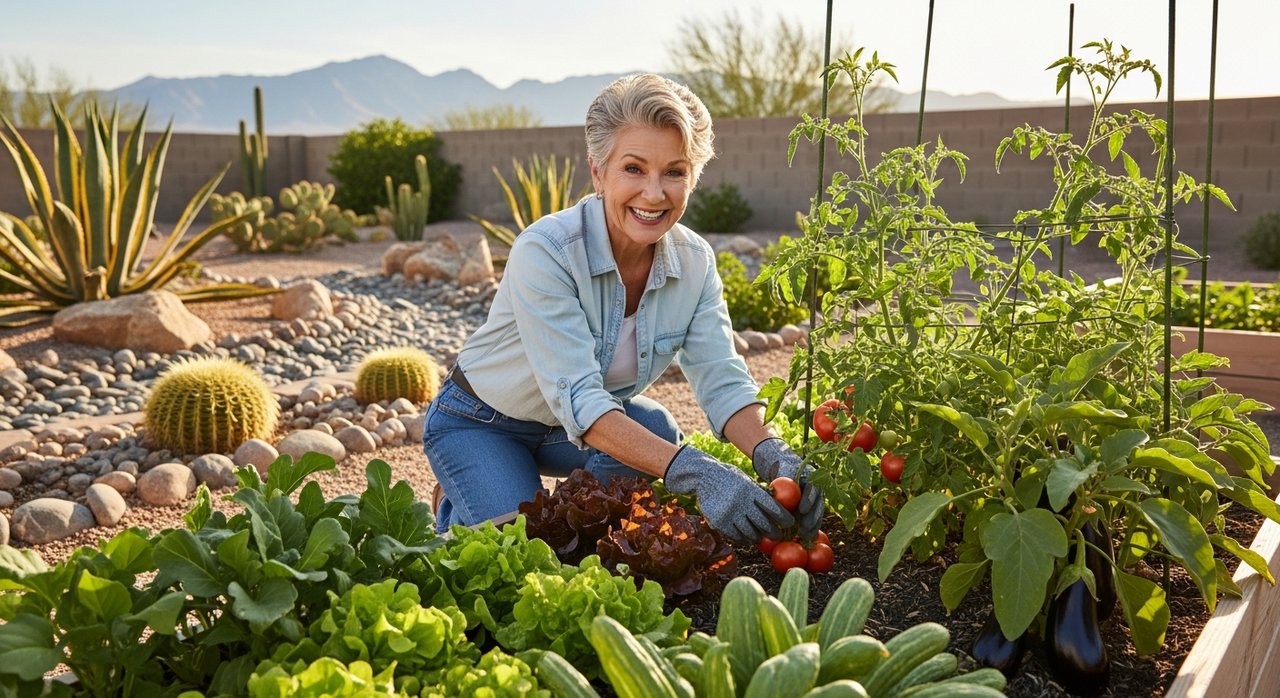
Raised beds are the single biggest change you can make. Research from the University of Nevada Cooperative Extension shows that raised bed gardening reduces bending by up to 70% compared to traditional in-ground planting. A 12-inch-high raised bed lets many people garden while standing or sitting on a garden stool. A 24-inch-high raised bed means no bending at all.
For Las Vegas specifically, I’d recommend:
- Depth: At least 12 inches — our rocky caliche soil below makes deeper digging impractical
- Material: Cedar or composite lumber — both handle heat without warping
- Width: No wider than 4 feet — you should be able to reach the middle from either side
- Location: East-facing exposure — morning sun, afternoon shade in summer is ideal
Container gardening is an even more flexible option. Pots can be moved to shade during peak heat, grouped for easier watering, and positioned at whatever height is most comfortable. I have several large containers on my back patio — tomatoes, herbs, peppers — that I rotate based on the season.
What Actually Grows in Las Vegas Heat — And What Doesn’t
Not everything survives a Las Vegas July. But more grows here than people realize — you just need to know what to plant and when.
📌 Related: Diabetes Management Tips for Las Vegas Seniors 2026
Heat champions (plant May-August, thrive in extreme heat):
- Armenian cucumber — incredibly productive in heat, mild flavor
- Okra — thrives above 90°F, actually grows faster the hotter it gets
- Sweet potatoes — love the heat, require minimal water once established
- Black-eyed peas — drought-tolerant, heat-resistant legume
- Basil — loves hot weather, dies in frost
Fall/spring favorites (Sept-Nov and Feb-Apr):
- Tomatoes — counterintuitively, fall is better than spring in Las Vegas
- Peppers — produce well September through November
- Lettuce, spinach, kale — winter staples here
- Broccoli, cauliflower — February/March planting for spring harvest
- Strawberries — produce November through April
Plants to avoid (or manage carefully):
Most standard annuals will struggle without afternoon shade from late April onward.
For permanent landscaping that needs minimal water, native Nevada plants are the answer. According to the Southern Nevada Water Authority, native plants require 50-70% less water than traditional landscaping after they establish — usually within 1-2 growing seasons. Desert willow, Texas sage, and palo verde are all striking plants that need almost nothing once they’re in.
Water-Smart Gardening: Cut Your Bill Without Cutting Your Plants
Water is the biggest practical concern for Las Vegas gardeners. The Southern Nevada Water Authority has some of the most aggressive conservation rules in the country — and water rates reflect that.
The good news: drip irrigation isn’t just cheaper, it’s actually better for plants in the desert. Drip systems deliver water directly to the root zone, reducing evaporation and fungal issues. SNWA data shows drip irrigation uses 30-50% less water than sprinklers for the same garden area.
Other water-saving strategies:
- Water in the morning — before 8 AM, evaporation is minimal
- Mulch heavily — 3-4 inches of wood chip mulch cuts water needs significantly
- Group containers — reduces wind exposure and water loss
- Use ollas — traditional buried clay pots that slowly release water to roots
The Southern Nevada Water Authority also offers free landscape workshops and consultations. The Springs Preserve in Las Vegas offers desert gardening tours and classes year-round — worth checking even if you’ve been here for years. I’ve picked up useful techniques there that I hadn’t thought of on my own.
Frequently Asked Questions
Is it really possible to garden year-round in Las Vegas?
Yes, with the right plants and timing. Cool-season crops like lettuce, spinach, and broccoli thrive in December and January. Heat lovers like okra and sweet potatoes take over in summer. The fall window (September through November) is genuinely excellent for tomatoes, peppers, and cucumbers. You won’t have all crops going at once — but something is almost always producing.
What’s the minimum amount of water a vegetable garden needs in Las Vegas?
A well-mulched raised bed with drip irrigation can produce good vegetables on as little as 1-2 gallons per square foot per week during the spring and fall seasons. Summer demands are higher — 2-3 gallons per square foot. Container plants dry out faster and may need daily watering in peak summer. Using moisture-retaining soil amendments like coco coir helps significantly.
Are there community gardens near Las Vegas for seniors?
Yes. Henderson, Summerlin, and Spring Valley all have community garden programs with available plots. The Clark County Extension Office (University of Nevada Cooperative Extension) offers free gardening consultations and connects residents to local growing resources. Call the UNCE office or check with your city’s parks and recreation department for current plot availability.
What’s the easiest thing a senior can grow for the first time in Las Vegas?
Herbs are the easiest entry point. Basil loves Las Vegas heat. Rosemary and thyme are practically indestructible here. A small container of mixed herbs on a covered porch requires almost no maintenance and provides immediate, usable results. For vegetables, Armenian cucumber planted in May is almost foolproof — it’s incredibly heat-tolerant and produces abundantly without much fuss.
Can I grow fruit trees in Las Vegas?
Absolutely. Pomegranate, fig, and citrus (Meyer lemon, Valencia orange) all thrive in Las Vegas’s heat. Citrus trees need frost protection in January if temperatures drop below 28°F, which happens occasionally. Fig trees are extremely reliable here. I have a Brown Turkey fig that I planted years ago — it now produces more fruit than I know what to do with by August.
References
- NOAA National Centers for Environmental Information — Las Vegas Climate Data
- University of Nevada Cooperative Extension — Nevada Gardening Resources
- Southern Nevada Water Authority — Water-Smart Landscaping
- National Gardening Association — Raised Bed Gardening for Seniors
- Springs Preserve — Desert Gardening Programs Las Vegas
Disclaimer: This article is for informational purposes only. Details may change — always verify with the relevant source before acting.