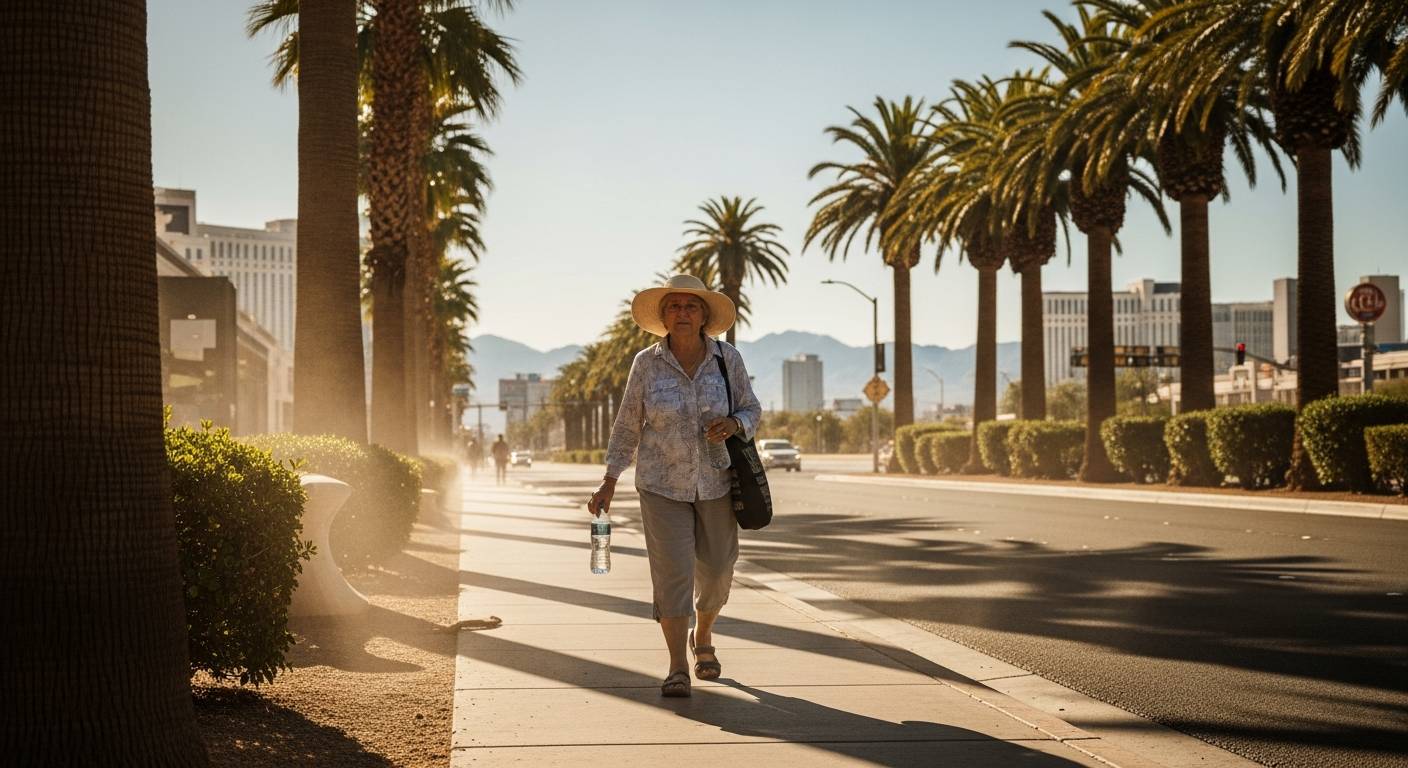
It was 112°F outside. I was sitting in my Tesla in a Walmart parking lot off Tropicana, waiting for an Uber ping, engine off to save battery. The dashboard thermometer read 117. Inside the car. With the windows cracked. I lasted about four minutes before I turned the AC back on and thought: if this is tough for me at 66, what about the guy I saw shuffling across the lot in khakis and dress shoes, no hat, no water bottle? Summer heat safety in Las Vegas isn’t a suggestion for seniors over 60. It’s survival.
That’s not an exaggeration. Summer heat safety for seniors isn’t optional here — it’s life or death.
In 2024, Clark County recorded 527 heat-associated deaths — a 73% increase over 2023, according to the Clark County Coroner. On top of that, more than 3,500 ER visits were heat-related that same year. Most of those people weren’t hikers caught in the desert. They were folks at home, at bus stops, walking to the pharmacy. And about 80% of heat-related deaths in the U.S. happen to people over 60. If you’re a senior living in Las Vegas, this is the most important article you’ll read before June.
Why Is Summer Heat So Dangerous for Seniors Over 60 in Las Vegas?
Here’s what a lot of people don’t realize until it’s too late. As you get older, your body loses its ability to regulate temperature the way it used to. You don’t sweat as efficiently. Your thirst signals get weaker — so you feel fine right up until you’re not. The CDC says adults over 65 are more prone to heat-related illness because of chronic medical conditions and prescription medications that affect how your body cools itself.
According to the CDC, older adults are particularly vulnerable to heat-related illness because aging reduces the body’s ability to regulate temperature — making heat safety protocols critical in Las Vegas summers.
Blood pressure meds, diuretics, antihistamines — they all mess with your body’s thermostat. If you’re taking any of those, the Las Vegas summer isn’t just uncomfortable. It’s a medical risk.
And here’s the Las Vegas-specific problem: it’s dry heat. People love saying that like it’s a good thing. But dry heat means your sweat evaporates before you even notice it. You don’t feel wet. You don’t think you’re overheating. Then suddenly you’re dizzy, confused, and your skin is hot and dry to the touch. That’s heat stroke — and it’s why summer heat safety education matters so much for our age group. And it can happen in under 30 minutes if you’re out in direct sun without water.
I’ve had Uber passengers tell me they walked three blocks from their apartment to the bus stop and almost passed out. Three blocks. In July, that’s enough.
What Are the Best Ways to Stay Cool and Safe During a Las Vegas Summer?
I’ve lived through fifteen Las Vegas summers now and learned summer heat safety the hard way. Here’s what actually works — not the generic “drink water” advice, but real strategies from someone who drives around this city every day in the heat.
Shift your schedule. From mid-June through September, I don’t go outside between 10 a.m. and 5 p.m. unless I absolutely have to. Grocery shopping? I’m at Smith’s at 7 a.m. Walking? Before sunrise or after sunset. Doctor appointments? I book the earliest slot available. This one change makes more difference than anything else. The temperature difference between 7 a.m. and 2 p.m. can be 25 to 30 degrees.
Hydrate before you’re thirsty. By the time you feel thirsty, you’re already behind. I keep a portable neck fan and a 32-ounce insulated water bottle with me every time I leave the house from May through October. The neck fan sounds silly until you try one — it keeps air moving around your face and neck, which is where your body dumps heat fastest. I use mine every single day in summer.
Never leave home without water. I keep two extra bottles in my car at all times. One in the center console, one in the trunk. If you break down on the 215 in July, a bottle of water might be the difference between waiting comfortably for AAA and ending up in the ER. Las Vegas isn’t a place where you can count on someone stopping to help within five minutes.
Use casinos as cooling stations. This is a locals trick that tourists don’t know about. Every casino on Boulder Highway, every Station Casino, every locals spot — they’re air-conditioned to about 68°F year-round. You don’t have to gamble. Walk in, sit down, get a free water from the cocktail waitress, cool off for twenty minutes. I’ve done it a hundred times. If you’re near a locals casino with senior promotions, you might even get a free lunch out of it.
Know the signs. Heat exhaustion: heavy sweating, cold and clammy skin, nausea, dizziness. Heat stroke: hot and dry skin, confusion, no sweating, fast pulse. Heat exhaustion means get inside and drink water. Heat stroke means call 911. Don’t wait. Don’t try to tough it out.
Where Can Seniors Find Free Cooling Centers in Las Vegas?
Summer heat safety resources are everywhere if you know where to look. Clark County activates official cooling stations every time an excessive heat warning is issued — which, in summer, is basically every week. These are free, air-conditioned spaces open to anyone who needs to escape the heat.
To find the nearest one, call 2-1-1 or visit HelpHopeHome.org. Clark County’s Beat the Heat SNV program also provides fact sheets in English and Spanish and runs public outreach every summer. Locations include community centers, public libraries, senior centers, and some churches — and they’re open to everyone, not just those experiencing homelessness. The Clark County Library on Flamingo has been my go-to for years — free Wi-Fi, air conditioning, and they run workshops and movie screenings that kill an entire afternoon. I wrote about a bunch of free things to do in Las Vegas for seniors — the library is at the top of that list, especially in summer.
If you rely on the bus, RTC recommends arriving at your stop no more than 10 minutes before your bus is due. Standing in the sun at a bus stop with no shade for 20 minutes in July is dangerous. Use the rideRTC app to track your bus in real time and leave your house or the cooling center at the last possible minute.
And here’s something nobody talks about: your electric bill. Running your AC all day in a Las Vegas summer can cost $300 to $400 a month. A lot of seniors on fixed incomes turn off the AC to save money. That’s how people die at home. If you’re struggling with utility costs, NV Energy’s Budget Billing program spreads your annual cost evenly across 12 months. And if your income qualifies, the Energy Assistance Program through Nevada’s Division of Welfare and Supportive Services can help cover part of your bill. Your life is worth more than a lower electric bill. If you’re living on a fixed income in Las Vegas, there are programs designed exactly for this situation.
What Should Every Senior Have Ready Before Summer Hits Las Vegas?
Think of it like hurricane prep, but for heat. Summer heat safety starts with preparation. By May, you should have these things sorted:
AC maintenance. Get your unit serviced in April or early May. A broken AC in July isn’t just an inconvenience — it’s a medical emergency for a senior living alone. Most HVAC companies in Las Vegas offer spring tune-up specials between $60 and $100.
A hydration routine. Don’t rely on thirst. Set a timer on your phone to drink 8 ounces of water every hour. The CDC recommends 60 to 90 ounces daily during extreme heat. Keep a filled water bottle on your nightstand, kitchen counter, and in your car.
An emergency contact plan. If you live alone, set up a daily check-in with a neighbor, friend, or family member. A simple text every morning: “I’m up, I’m fine.” If they don’t hear from you by 10 a.m., they check on you. This has saved lives in Las Vegas.
Light clothing and sun protection. Lightweight, light-colored, loose-fitting clothes. A wide-brimmed hat — not a baseball cap, a real wide-brimmed hat that covers your ears and neck. SPF 50 sunscreen applied 20 minutes before going outside. Reapply every two hours. Your skin doesn’t get tougher with age. It gets more vulnerable.
Store medications properly. Heat destroys insulin and many other critical medications. If you use insulin, it must stay below 77°F — a hot car (which can hit 130°F+) will degrade it within hours. Keep medications in an insulated pouch when you’re out, and never leave them in a parked car. If your home loses power, get your insulin to a pharmacy or cooling center immediately.
Know your medications. Talk to your doctor or pharmacist about whether any of your prescriptions increase your heat sensitivity. Beta-blockers, diuretics, and some antidepressants can all affect how your body handles heat. You might need to adjust your dosage or timing during summer months.
Frequently Asked Questions
How hot does it get in Las Vegas during summer?
Las Vegas regularly hits 110°F to 115°F in July and August, with overnight lows that can stay above 90°F. The record high is 120°F, set in July 2024. Summer heat safety matters most for seniors over 60 because these temperatures are dangerous even with short outdoor exposure. The heat season typically runs from late May through mid-October, with the most dangerous period being June through September.
What temperature is dangerous for elderly people?
Any temperature above 90°F poses a risk for seniors, especially those with chronic health conditions or on certain medications. When the heat index — which factors in humidity — exceeds 105°F, the CDC considers it extremely dangerous for adults over 65. In Las Vegas, dry heat can be deceptive because low humidity makes it feel less hot than it actually is.
Where are the cooling centers in Las Vegas?
Clark County activates cooling centers during excessive heat warnings. Locations include public libraries, community centers, senior centers, and participating churches. Call 2-1-1 or visit HelpHopeHome.org for current locations and hours. Clark County’s official cooling centers typically operate from 11 a.m. to 7 p.m. when excessive heat warnings are in effect — plan accordingly, especially if you rely on transit. For the most current list, call 2-1-1 or visit HelpHopeHome.org.
Can heat make blood pressure medication less effective?
Yes. Heat causes blood vessels to dilate, which can amplify the effects of blood pressure medications, potentially causing dangerous drops in blood pressure. Diuretics also increase dehydration risk in hot weather. Always consult your doctor about adjusting medications during Las Vegas summers — this is especially important for seniors managing multiple prescriptions.
How can I lower my electric bill while keeping my AC running in Las Vegas?
NV Energy’s Budget Billing program averages your annual usage across 12 months so you pay a consistent amount year-round instead of getting hit with $400 bills in July. Set your thermostat to 78°F when you’re home and 85°F when you’re away. Close blinds on south- and west-facing windows. If your income qualifies, Nevada’s Energy Assistance Program can help cover utility costs. Never turn off your AC entirely to save money — summer heat safety means keeping your home cool, because the health risks far outweigh the savings.
References
- CDC — Heat and Older Adults (Aged 65+)
- Southern Nevada Health District — Heat-Associated Deaths Report 2024
- Clark County — Beat the Heat Public Safety Effort
- RTC Southern Nevada — Summer Heat Travel Tips
- BrightStar Care — Preventing Heat Stroke in Las Vegas Seniors
- Las Vegas HEALS — Heat Wave Safety Tips for Older Adults
- Woodwell Climate — Extreme Heat Risks in Las Vegas
Disclaimer: This article is for informational purposes only and does not constitute professional medical advice. Consult your doctor before making changes to your medication or health routine, especially during extreme heat conditions.