Disclosure: This post contains affiliate links. If you purchase through these links, I may earn a small commission at no extra cost to you. I only recommend products I personally find useful.
⭐ Quick Summary
Las Vegas seniors lost over $115 million to fraud and cybercrime in 2025 — and the scams here have a twist most other cities don’t have. Tourist culture bleeds into our neighborhoods, crypto kiosks sit on nearly every corner, and scammers know exactly who to target. This guide covers the specific scams hitting Southern Nevada seniors right now, how to spot them before they cost you, and the free local resources that can actually help.
I saw a number a few weeks back that genuinely stopped me mid-coffee. $115 million. That’s what seniors 60 and older in Nevada reported losing to fraud and cybercrime in 2025 alone — 3,008 complaints in one year. I’ve been living in this city for over a decade, and I’ll be straight with you: I wasn’t surprised. Not even a little.
Las Vegas isn’t like other cities when it comes to scams. The tourist economy here means a certain kind of hustle is basically baked into the culture. Plenty of it stays on the Strip. But some of it doesn’t.
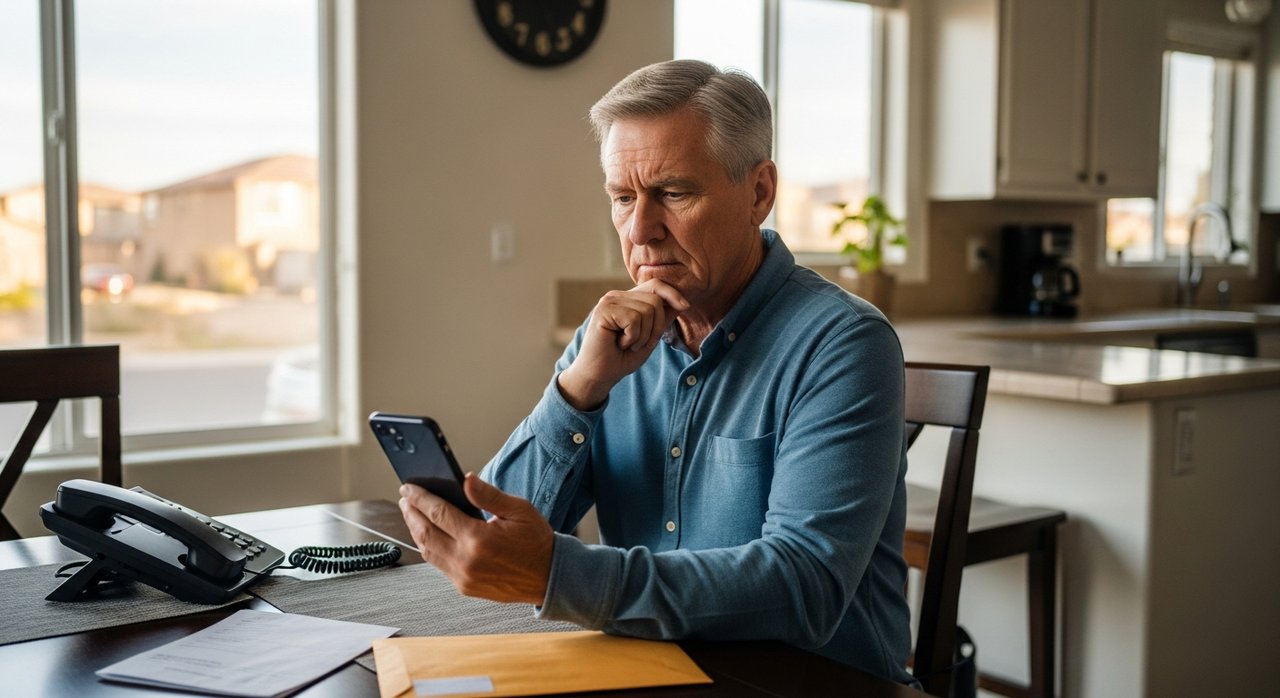
I picked up a passenger a while back — retired guy, mid-sixties, been here his whole life. He’d just gotten off the phone with someone claiming to be from the IRS, demanding immediate payment or he’d be arrested. He was shaken. Nearly drove to the bank to pull cash. He didn’t, thankfully — he called his daughter first. But not everyone does that. That’s the part that keeps me up at night.
Why Las Vegas Seniors Get Hit Harder
Here’s the deal — scammers don’t pick targets randomly. They go where the money is, and they go where the population is trusting. Seniors often check both boxes, especially here.
Las Vegas has one specific threat that most cities don’t. Nevada has 447 bitcoin kiosks statewide — 336 of them in Southern Nevada. According to Nevada Current and AARP, people aged 60 and older lost $107.2 million nationally to these machines in 2024. They’re at gas stations, convenience stores, grocery parking lots. You’ve seen them.
The scam goes like this: someone calls you pretending to be from the government, a bank, or a utility company. They say there’s a problem with your account — maybe you owe money, maybe your Social Security is suspended, maybe there’s fraud on your Medicare. They tell you to go to one of those crypto kiosks and send payment immediately. That’s it. Money gone the second you hit send.
It’s not complicated. That’s what makes it work.
The FBI’s Las Vegas field office issued a formal “spike” warning in July 2025 after documenting more than $1.1 million in losses right here in the valley — all from scammers impersonating federal agents from the FBI, the DEA, and the Treasury Department. Real agents don’t call you and tell you to go buy Bitcoin. Not gonna lie, the fact that I have to write that sentence is frustrating.
The Scams You’ll Actually Encounter Here
I’m not going to run through a list of thirty different schemes. Most of that information is noise. What I want you to know is what’s actually happening in Southern Nevada right now.
Government impersonation. Someone calls claiming to be Social Security, the IRS, or Medicare. They say something’s wrong with your account and demand immediate action — usually payment via wire transfer, gift cards, or that crypto kiosk down the street. According to the Federal Trade Commission’s 2025 report on older adults, impersonation scams rank among the highest-loss categories for people over 60. The FTC reported total fraud losses to older adults hit $2.4 billion in 2024 — four times what it was in 2020.
Here’s the thing though — real government agencies will never call you demanding immediate payment. They send letters. Written ones. With addresses you can verify.
Tech support scams. A popup appears on your computer. Sometimes it looks like a Microsoft warning, sometimes McAfee. It says your machine is infected and gives you a phone number to call. You call, someone walks you through “fixing” the problem while quietly accessing your files and banking information. I had a neighbor who lost $4,000 this way before she realized what had happened.
Door-to-door. This one’s been surging in Las Vegas neighborhoods. Someone knocks claiming to be from a home security company, a solar panel installer, or a charity. Some are legitimate. Many aren’t. If you didn’t invite them and you don’t recognize the company, there’s no rule that says you have to open the door. (Trust me on this one.)
Smishing and QR codes. Text messages telling you to scan a code or click a link to claim a prize, verify your account, or update your delivery address. The Southern Nevada Senior Law Program has flagged these as surging in 2025. Don’t tap those links. Ever.
What Actually Protects You
Take it from me — the best protection is a few simple habits, not expensive software.
Hang up and call back. If someone calls claiming to be from your bank, Social Security, or any government agency and wants something from you — hang up. Look up the official number yourself and call them directly. This one move cuts your risk dramatically. It’s a no-brainer, but most people don’t think to do it in the moment because the caller creates urgency on purpose.
Never pay with gift cards or crypto. Plain and simple: no legitimate government agency, utility company, or business will ask you to pay with a gift card or a Bitcoin kiosk. If someone asks you to do that, it’s a scam. Full stop.
Slow down on calls. Scammers rely on pressure. They want you to act before you think. The moment someone on the phone tells you that you have to decide right now — that’s your signal to stop. Real companies and agencies will give you time to verify.
Protect your landline. If you still have a landline, a call blocker can filter out the majority of robocalls and known scam numbers before they even ring. I’ve seen enough of my passengers get harassed on their home phones that I keep an eye on what’s available.
📞 If you’re looking for one option:
CPR V5000 Call Blocker — blocks known scam numbers automatically and lets you add numbers manually. Over a million people use it. For those on a fixed income who don’t want a monthly subscription, it’s worth looking at.
Talk to someone before you act. This sounds basic, but it works. Before you send money, give out information, or make any financial decision prompted by a call or a popup — call a family member or a friend. Most scams fall apart the second a second person hears them.
Free Local Help You Might Not Know About
Here’s what I want you to bookmark, not just read and forget.
AARP is running free anti-scam workshops throughout the Las Vegas valley in April 2026 — eight events covering identity theft, imposter scams, and sweepstakes fraud. The Rainbow Library event alone drew over 36 people. These are free, practical, and worth your time. Check the AARP Nevada fraud prevention page for the current schedule.
The Southern Nevada Senior Law Program offers free workshops on scams, fraud, and identity theft. You can reach them at 702-229-6596. Free legal help. No catch. If you’ve already been a victim of fraud, the Legal Aid Center of Southern Nevada (lacsn.org) can also help.
Henderson PD launched a dedicated fraud awareness campaign targeting senior protection — if you live in Henderson, check with your local precinct for community education events.
And the Nevada Consumer Affairs division keeps an updated list of current scams targeting state residents at consumeraffairs.nv.gov. Worth checking a couple times a year.
Frequently Asked Questions
What should I do if I already sent money to a scammer?
Report it immediately to the FTC at reportfraud.ftc.gov and to your bank. If you sent cash through a crypto kiosk, contact the kiosk operator and report it to the FBI’s Internet Crime Complaint Center at ic3.gov. Recovery is difficult, but the sooner you report it, the better the chance. Also contact the Legal Aid Center of Southern Nevada — they can advise on next steps at no cost.
Are those Bitcoin kiosks at gas stations actually dangerous?
The machines themselves aren’t illegal — but they’re heavily used in scams because transactions are nearly instant and very hard to reverse. AARP has called Nevada’s unregulated crypto kiosk market a “paradise for scammers.” The rule: never use one in response to a phone call, a text, or a popup. Ever.
How do I know if a call from Social Security is real?
Hang up and call Social Security’s official number yourself: 1-800-772-1213. The real SSA will rarely call you out of the blue — they typically communicate by mail. If someone calls claiming your Social Security number has been suspended, that’s a scam. SSA doesn’t suspend numbers.
My neighbor lost money to a scam. What can they do?
The Southern Nevada Senior Law Program (702-229-6596) offers free help. Also encourage them to file a report with Nevada Consumer Affairs and the FTC. Even if recovery isn’t possible, reports help law enforcement track patterns and warn others.
Is it safe to call back a number that appeared on my caller ID?
Not necessarily — caller ID can be spoofed to look like it’s coming from a legitimate agency. Always look up the official number independently from the organization’s official website, not from what appeared on your screen or was given to you by the caller.
References
- FBI: Nevada lost more than $302 million to cybercrime in 2025 — FOX5 Las Vegas
- Protecting Older Consumers 2024–2025 — Federal Trade Commission
- Nevada’s unregulated crypto kiosks are a paradise for scammers — Nevada Current / AARP
- WARNING: Southern Nevada Seniors Targeted by Surging Scams — Southern Nevada Senior Law Program
- Nevada Fraud Prevention — AARP
- Senior Fraud Alerts — Nevada Consumer Affairs
- FBI officials warn of spike in elder scams across Las Vegas Valley — FOX5
Disclaimer: This article is for informational purposes only. Details may change — always verify with the relevant source before acting.