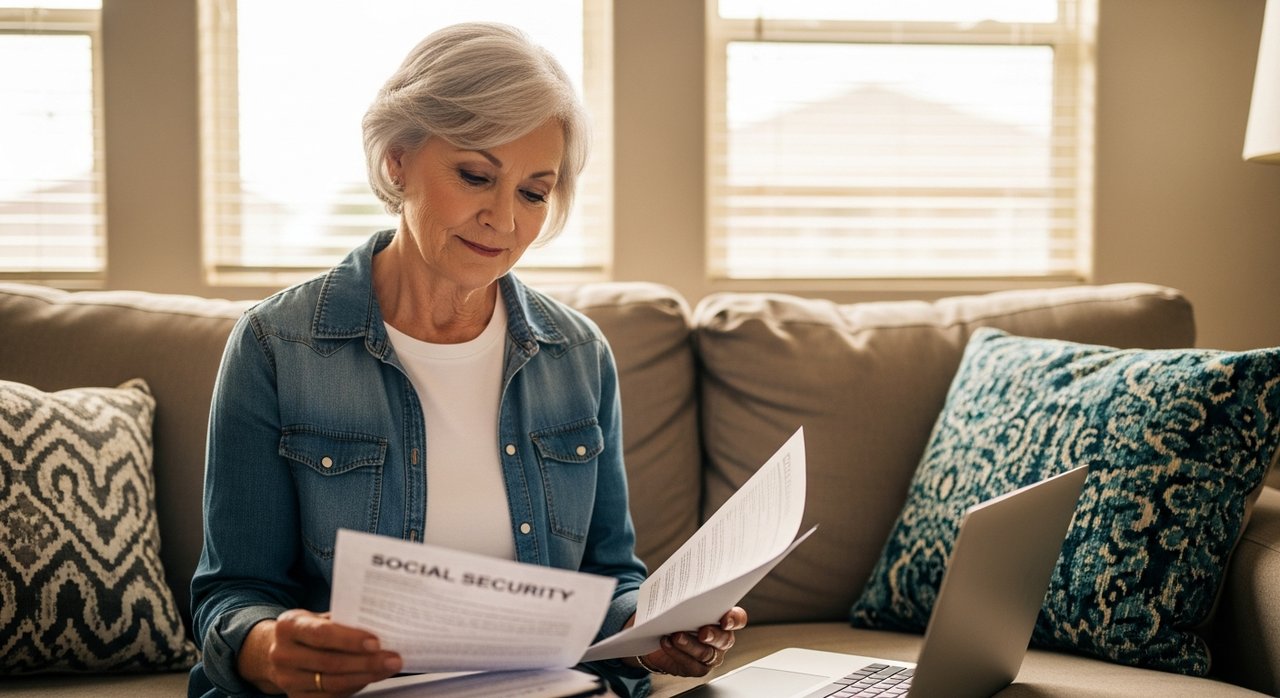
The letter came on a Thursday. Plain white envelope, no return address I recognized. My neighbor Margaret — she’s 71, lives three houses down — almost threw it out. She’d been in a fog since her husband passed the previous spring, and most of the mail she got those first few months was either condolence cards or bills. This one was from Social Security. It outlined her Social Security survivor benefits eligibility and listed a monthly amount she had no idea she was entitled to. She called me. We sat at her kitchen table and read through it together.
I’ve thought about that conversation a lot since then. The money she’d been leaving on the table for almost a year was real money — not small. And she’s not unusual. A lot of Nevada seniors don’t fully understand how survivor benefits work, when to claim, or what the rules are around remarriage and divorced spouses. This guide covers the specifics.
Who Qualifies for Social Security Survivor Benefits?
The basic rule is straightforward: if your spouse worked and paid into Social Security, and they’ve passed away, you may be entitled to monthly benefits based on their earnings record.
According to the Social Security Administration, survivor benefits are available to widows, widowers, and dependents of workers who paid into Social Security — and the amount depends on when you claim and your relationship to the deceased.
Specifically, you may qualify if:
- You are age 60 or older (or 50 or older if you have a qualifying disability)
- You were married to the deceased for at least 9 months at the time of death
- You are currently unmarried — with important exceptions
There are exceptions to the 9-month marriage requirement. If your spouse’s death was accidental, or if they died while on active U.S. military duty, the duration requirement is waived. And if you’re caring for the deceased’s child who is under 16 or has a disability, you can apply for survivor benefits at any age.
Divorced spouses can also qualify — even if you’ve been divorced for years. The requirements are: the marriage lasted at least 10 years, and you are currently unmarried (or remarried after age 60, which is a separate exception explained below).
How Much Do Survivor Benefits Actually Pay?
The amount depends almost entirely on one thing: what your deceased spouse was receiving — or would have received — from Social Security.
📌 Related: When to Claim Social Security at 62 vs 70 — Nevada Reti
Here’s how the percentage breaks down by age at claim:
- 60 years old: 71.5% of your spouse’s benefit
- Between 60 and full retirement age: Somewhere between 71.5% and 99%, scaling upward
- At full retirement age or older: 100% of your spouse’s benefit
Full retirement age for survivor benefits is slightly different from the standard retirement FRA. For surviving spouses born in 1959, it’s 66 and 6 months. For those born in 1962 or later, it’s 67.
So if your spouse was collecting $2,200/month at the time of death, and you’re already at full retirement age, you’d receive $2,200/month. If you claim at 60, you’d receive $1,573. That’s a $627/month difference — or more than $7,500 per year. Over a 20-year retirement, that decision adds up to $150,000+. This is why timing matters.
One important clarification: Social Security doesn’t pay both your retirement benefit and a survivor benefit at the same time. If you’re entitled to both, SSA pays the higher of the two — not the sum.
The Remarriage Rule — This One Trips People Up
This is the part most people don’t know, and getting it wrong is expensive.
If you remarry before age 60, you lose your eligibility for survivor benefits on your deceased spouse’s record. That’s a hard rule with very limited exceptions.
If you remarry at age 60 or later, you can still claim survivor benefits on your deceased spouse’s record — or you can claim benefits on your new spouse’s record, whichever is higher. Age 60 is the threshold. One day matters.
This rule comes up a lot in Las Vegas. Nevada has one of the higher divorce and remarriage rates in the country — it’s part of the local reality. If you’re widowed and in a new relationship, this is a conversation worth having with a financial advisor or directly with SSA before you decide to formalize anything.
📌 Related: Dental Care for Seniors in Las Vegas Nevada 2026 Guide
The same remarriage rule applies to divorced spouse survivor benefits. If you remarried after age 60, you can still claim on your ex-spouse’s record if that benefit is higher than what you’d get from the new marriage.
Claiming Strategy: When to Take Survivor Benefits
One of the more useful strategies available to people who are eligible for both their own retirement benefit and survivor benefits is this: you don’t have to claim both at the same time.
Example: Say you’re 60, recently widowed, and your own Social Security retirement benefit at 70 will be significantly higher than your survivor benefit. You could claim the survivor benefit at 60 (at 71.5%), live on that while your own benefit continues to grow, and then switch to your own retirement benefit at 70 when it reaches its maximum.
Or the reverse: if your spouse had a higher earnings record than you, it might make sense to take your own retirement benefit early and switch to the survivor benefit later at 100%.
There’s no universally right answer — it depends on your age, health, each spouse’s earnings history, and your financial situation. The SSA can walk you through the numbers, and a fee-only financial planner who specializes in Social Security can model the scenarios. What most people don’t realize is that you can make this decision once and later change course if your situation changes significantly — though switching back isn’t always straightforward, so doing the math upfront is worth the effort.
One more thing about working while collecting: if you receive survivor benefits before reaching full retirement age and you’re still working, SSA withholds $1 in benefits for every $2 you earn above $24,480 in 2026. This isn’t a penalty — withheld amounts are recalculated when you reach FRA. But it can affect your monthly cash flow, so plan accordingly.
Nevada has no state income tax, which means your Social Security survivor benefit isn’t taxed at the state level — that’s a meaningful advantage compared to states like Colorado or Minnesota that do tax Social Security income. At the federal level, up to 85% of your benefit may be taxable depending on your combined income. A tax professional familiar with retirement income can help you structure withdrawals to minimize that exposure.
Frequently Asked Questions
How do I apply for Social Security survivor benefits in Nevada?
You can’t apply online — survivor benefits require a call or in-person visit. Call SSA at 1-800-772-1213 to schedule an appointment at your local office. You’ll need your spouse’s Social Security number, death certificate, your own Social Security number, marriage certificate, and proof of age. Calling as soon as possible after the death is strongly recommended, because benefits don’t always start from the application date retroactively.
Can I get survivor benefits if I’m divorced?
Yes, if the marriage lasted at least 10 years and you are currently unmarried (or remarried after age 60). You don’t need your ex-spouse’s knowledge or cooperation to apply. The application is based on their earnings record, which SSA already has on file.
What is the $255 death benefit?
It’s a one-time lump sum payment SSA makes to a surviving spouse or certain children of the deceased. It’s been $255 since 1954 and hasn’t changed. It must be applied for within two years of the death. It won’t cover funeral expenses, but it’s a benefit you’re entitled to, and it’s worth claiming. Contact SSA as soon as possible after the death.
Will survivor benefits affect my own Social Security retirement?
Collecting survivor benefits doesn’t reduce or eliminate your own retirement benefit. Your retirement benefit continues to grow if you delay claiming it. The limitation is that SSA pays only the higher of the two benefits at any given time — but you can switch between them strategically, as described above.
How long do survivor benefits last?
For a surviving spouse who doesn’t remarry before 60, they generally last for life. If you remarry before 60, the benefit stops. If you remarry at 60 or after, the benefit continues — you keep receiving the survivor benefit or switch to benefits from the new spouse’s record, whichever is higher. Benefits do stop if remarriage occurs before 60, which is why the timing matters so much.
References
- SSA.gov — Survivor Benefits
- SSA.gov — What You Could Get from Survivor Benefits
- SSA.gov — Who Can Get Survivor Benefits
- AARP — Social Security When a Spouse Dies
- AARP — Will Remarrying Affect My Survivor Benefits?
- AARP — Eligible for Both Retirement and Survivor Benefits
- SSA — How Work Affects Your Benefits (2026)
Disclaimer: This article is for informational purposes only and does not constitute professional financial or legal advice. Consult a qualified advisor before making decisions.