Disclosure: This post contains affiliate links. If you purchase through these links, I may earn a small commission at no extra cost to you. I only recommend products I personally find useful.
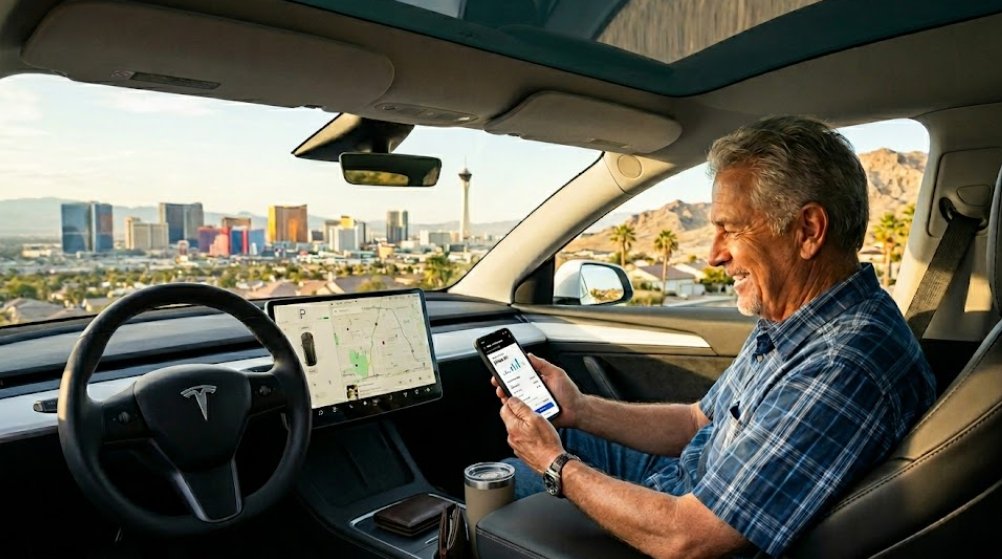
My son thought I was joking. My daughter called twice to make sure I was okay. And my buddy Dave, who lives out in Summerlin same as me, just shook his head and said “You don’t need the money, why are you doing this?”
I’m 66 years old. I started driving for Uber two years ago. And Dave was wrong—not about the money part, but about the why. I do it because that extra $1,400 to $1,600 landing in my account every month feels really, really good. Doesn’t matter if you need it or not. That’s what I’m going to break down for you today. Real numbers. My numbers.
What My Situation Looks Like (Before We Get to the Money)
I want to be straight with you. I’m not some rideshare guru. I’m a retired guy in Henderson who bought a Tesla Model Y, figured out the math, and started driving part time.
According to the Social Security Administration, you can work and still receive Social Security benefits — but your earnings may temporarily reduce your benefit amount depending on your age and income level.
Here’s my schedule: five days a week, four hours a day. That’s 20 hours total. I’m home by noon most days. I have lunch. I watch whatever game is on. Life is good.
I don’t do late nights. Not because I can’t—because I’ve done the math and it’s not worth it. The drunk passengers, the safety concerns, the lower tips after midnight. No thanks. Give me a 4 AM airport run any day of the week. Businesspeople tip. They’re polite. They’re in a hurry and grateful you showed up on time.
The Tesla thing matters more than most people realize. I charge at home overnight. My cost per mile? About four cents. A friend of mine doing the same routes in his Honda Accord pays twelve to fifteen cents per mile just in gas. Over a full month that gap turns into $100 or more. Multiply that over a year. It adds up. Fast.
I’ve also been doing this long enough to actually know the city. I’m not guessing. I know which terminals at Harry Reid back up on Thursday evenings. I know that the hotels on the north end of the Strip tip better than the ones on the south. I know Spring Valley pickups tend to run longer hauls. That local knowledge is worth real money—and it’s something a new 25-year-old driver just doesn’t have.
📌 Related: Brain Health for Las Vegas Seniors: What Actually Works
The Actual Income Numbers—No Sugar Coating
Fine. Here’s what everyone comes to read.
Most months I gross between $2,600 and $3,000. There are better months. January when CES hits the Convention Center? I’ve cracked $3,200. August is my slow month—the summer heat keeps tourists away and the airport slows down. That’s just how it is.
Per shift that’s roughly $130 to $150. Per hour, about $26 to $30 before anything comes out.
Now stop. Before you get excited—that number means almost nothing by itself. I’ve watched guys in the Uber driver forums celebrate their “great month” of $3,000 and then get blindsided by tax season. Don’t do that. Let me show you the actual math.
There’s no state income tax in Nevada. That part’s great. I’m not bleeding money to Sacramento like my California friends. But the federal bill is real, and self-employment tax on top of that runs roughly 15.3% on net earnings. On $2,800 gross with $450 in expenses, you’re still looking at a meaningful quarterly payment to the IRS. Budget for it. Every month. Or you’ll hate yourself in April.
What It Actually Costs Me to Run This Operation
This is the section most Uber driver articles skip. I won’t.
Insurance is the first punch. You cannot—I mean cannot—use regular personal auto insurance while driving for Uber. Your carrier will deny the claim and potentially cancel your policy if they find out. Rideshare coverage costs me an extra $225 a month. That’s non-negotiable and it’s not optional.
Maintenance: even a Tesla has costs. I budget $150 a month. That covers tire rotations, a car wash twice a week (passengers notice a dirty car immediately), and a cushion for anything unexpected. Last spring I needed new wipers and a cabin air filter. Nothing dramatic. But still.
Electricity: $50 to $80 a month. This is my fuel bill. Compared to gas, I’m saving well over $100 every single month.
📌 Related: How to Use Uber in Las Vegas: Airport & Hotel Pickup Gu
Phone and data: $65 a month. You’re running GPS nonstop, streaming music, keeping the Uber app live. A weak data plan will cost you rides.
Add it all up and my monthly expenses run $490 to $520. Take that from the gross. Then set aside a chunk for federal taxes. What’s left is what I actually keep.
That number? $1,400 to $1,600 most months. Plus tips—which I didn’t include in that figure. Tips from airport passengers, regular business travelers, hotel guests heading out to Anthem for a conference—those add another $250 to $400 on a decent month.
Why This City Makes the Difference
I’ve talked to Uber drivers in Reno. In Sacramento. In Tucson. Their numbers are not my numbers. Not even close.
Las Vegas doesn’t sleep. The airport runs 24 hours. The Strip runs 24 hours. The Convention Center books events that bring in 40,000 people at a time. There’s always demand here in a way that just doesn’t exist in most cities.
And the passenger mix matters. Tourists tip differently than locals. Business travelers going from the airport to a Strip hotel tip well and they’re in a good mood when they land. Conference attendees heading from Henderson to the Convention Center are often on expense accounts. These are good rides.
We as older drivers also bring something to this job that younger drivers don’t always have. I know how to read a person. I know when someone wants to talk and when they want silence. I know how to make a six-minute airport ride feel pleasant instead of awkward. My rating has been 4.93 for over a year. That opens doors to premium programs with higher-paying rides. Experience is genuinely an edge in this business.
A couple of equipment items are worth the investment for serious drivers. A quality phone mount keeps your device stable and visible without blocking sightlines — the iOttie Easy One Touch 5 dashboard mount is a favorite among rideshare drivers for its one-handed release and strong grip. A dash cam also protects you if a passenger ever disputes a rating or fare — the Garmin Dash Cam 57 records in 1440p and is compact enough to stay out of passengers’ sightlines.
🚗 Gear that pays for itself quickly: iOttie Phone Mount · Garmin Dash Cam 57
Questions and Answers
What can a part-time senior Uber driver realistically earn in Las Vegas?
Working 15 to 20 hours a week in Las Vegas, expect to gross $1,200 to $1,800 monthly. Net take-home after expenses and taxes typically runs 50 to 60 percent of that. Seasonal events, peak hours, and airport proximity all push the number up. Las Vegas is a genuinely strong market for this.
Is Uber driving a smart move for retirees?
It depends entirely on how you approach it. Work hours that match your energy. Don’t push past your limits. Keep your vehicle in good shape. The flexibility is real—you can work three days one week and six the next. The risk is burning out or skipping the expense tracking and getting killed at tax time. Go in with eyes open.
How does Nevada’s tax situation affect Uber income?
No state income tax is a meaningful advantage—especially compared to California or New York. You still owe federal income tax and self-employment tax. File quarterly. Keep mileage logs. A tax professional who handles gig workers pays for themselves easily in deductions alone.
Does driving a Tesla for Uber actually pencil out?
For me it does. Four cents per mile in electricity versus twelve to fifteen cents in gas. No oil changes. Lower overall maintenance. A clean modern interior that passengers respond well to in ratings. The upfront cost is high but the operating savings are real, especially if you’re putting in consistent hours.
What do most new Uber drivers get wrong?
They treat gross income like it’s net income. I’ve seen it over and over in the forums. Someone makes $3,000 in a month, feels great, spends accordingly, and then tax season arrives. Track every expense. Set aside money for taxes every single month. And don’t drive at hours that feel unsafe or exhausting. This gig only works if you stay healthy enough to keep doing it.
References
- GigVerdict: Uber Part-time Pay in Las Vegas (Mar 2026)
- Salary.com: Uber Driver Salary in Las Vegas, NV
- Nevada Department of Taxation: Information About Nevada’s Taxes
- Uber Driver Jobs in Las Vegas, NV
Disclaimer
The information provided in this article is based on the author’s personal experience and current market data for Las Vegas, Nevada as of 2026. Actual earnings may vary significantly based on individual circumstances, location, vehicle type, hours worked, and market conditions. This article is for informational purposes only and should not be considered financial, legal, or tax advice. Individuals considering becoming Uber drivers should conduct their own research, consult with tax professionals regarding self-employment taxes, and ensure they meet all local regulations and insurance requirements. Earnings are not guaranteed, and individuals should carefully evaluate all costs and risks before undertaking any gig work. Always maintain proper insurance and vehicle maintenance. Check with your state and local authorities regarding any regulations or licensing requirements specific to your area.